


The Story of "The Story of Camp Woolsey"

"The Story of Camp Woolsey" book was a long time coming. When we started working on this project in 2015, we didn't really expect it to take this long, or for it to end up being what it's become.

Because in 2015, we thought we were recording the middle of Woolsey's story. We had no idea we were documenting the end of the camp's 83 years.
What we knew was that Woolsey was approaching it's 80th birthday, and we wanted to celebrate the place we loved.
So, here's the story behind "The Story of Camp Woolsey".
Before the Project - 2007

Emma and I met in 2007, when we attended the "Leaders of Tomorrow" camp. We both had previously been to Woolsey for summer programs and with our units, but this was our first time attending together. It was also when we became more widely known by our camp names. Jaf for me and Brown Bat (or B-bat) for Emma. Many of the people we met that year became lifelong friends as we went back to work at Woolsey summer after summer.
Many of my close friends, to this day, are people I met while working at Woolsey. Either that first year as LITs, or the following summers. Woolsey had a way of making spending a week on site together feel like years of having known each other. Emma and I, along with so many good friends, worked at Woolsey during high school, returned every summer during University, and continued for a few years into our twenties. Woolsey was a summer job, yes, but it was also a place to see our friends, to be outdoors, have adventures, and to grow as young women.
What Emma and I have come to realize, while working on this project, is that our experiences at Woolsey were shared by countless people since 1937. And those stories deserved to be shared.
The Project Begins - 2014
Emma started all of this. While studying history at Carleton University, she found some old articles about Woolsey and started reading. I went away for school, to study classical history at Queen's, but our friendship continued as I returned to Ottawa and Woolsey every summer. After I moved back in 2014, Emma and I joined a Spark unit that was run by some of our friends from Woolsey.

It was the following April, in 2015, that Emma asked me if I wanted to go to camp for a week with her to look through some old things that had been stored at Woolsey after Ottawa Guide House closed in 2012. I grabbed my laptop and my mom's fancy scanner, and we went up for the week. We took pictures, scanned documents, photos and old slides, and really began to build the timeline of Woolsey together. I'm very grateful we did this, as I have no idea what happened to any of those things we found. I only wish I'd scanned even more things!
As Emma continued to do research, I took on the task of documenting. That summer, I made sure to take pictures of every site at camp, do make sure we had an up-to-date collection of photos. This is why, in our online library and in the book, you might notice many of the photos are dated 2015. Over the following years, I continued to take pictures while working at camp. Every time I found an interesting document, or visited in a different season for a special event, I took pictures to add to our shared dropbox folder.
The Email - 2017
Two years later, before our summer season began at Woolsey, staff were given a head's up that a few days later, every adult member of Guiding in Ontario were going to receive an email about camps across Ontario closing.
I don't know where Emma was when she heard this news, as she didn't work at Woolsey that year. But I remember, it was during the Coordinator week (Directors started work 3 weeks before camp, coordinators 2 weeks, and the rest of the staff 1 week for pre-camp training and set up). We were sitting around Wright's campfire when we found out.
And we were devastated.
2017 was my tenth year working at Woolsey, and it ended up being my last (a trip to India the following summer meant I couldn't work, although I did volunteer in 2018 and 2019 for a few weeks). I was the Day Camp Program Director for my second year.

But there was some hope, because the email said that if camps could "reverse their financial situation" they may get to remain open. And it felt distant. The email said camps would close in 2019. Surely, there was time to save Woolsey. And many people tried!
And, 2017 was Woolsey's 80th birthday! If the camp could last for 80 years, we felt hopeful it could make it to 90, and 100, and beyond.
I remember, aside for our own feelings, the most annoying part of this summer was trying to not talk about it. We were told, that as employees, we weren't allowed to talk badly about this news. But we had parents, kids and guiders asking questions constantly. I even remember going with the day camp kids to the nearby Morris Island for a day trip, and having strangers ask me about the news. How was I, someone who had fifteen years of history with Woolsey, supposed to talk positively about Woolsey's closure?
It was into this heartbreak that Emma and I decided to start sharing what we had spent two years discovering. We made The History of Camp Woolsey facebook page, so we could share the photos and information we had learned. This ended up being an excellent idea for the project. The facebook page has given us so much from the community. People have sent in pictures and stories, helped us answer questions, and really shown us how much Woolsey changed peoples lives.
The Project Expands - 2018
Fueled by the knowledge that we were now documenting the end of an era, we started working harder on the project. I began writing the first version of the book, while Emma worked on creating a travelling museum exhibit.

The first exhibit was held at the Bytown Museum in the spring on 2019. Later, a second running of the exhibit (altered slightly) was held at Pinhey's Point Historic Site.
Around this time, Emma also started travelling to different events at Woolsey (such at Blue Wave or Greenmania), and Guider events in Ottawa to set up a small booth about Woolsey's history. Sometimes, I joined her.
This was our way of trying to save Woolsey. While other people tried to raise money and create proposals, we did what we did best — storytelling and history. We hoped that if more people knew the history of the camp, it would help encourage them to fight to keep Woolsey open.
COVID - 2020
By the time it was announced that the COVID lockdowns would shut down camping in the summer for 2020, we already knew it was supposed to have been Woolsey's last summer.
I remember sitting around Council Fire at the Thinking Day event on February 22, thinking that I might apply to work at camp for one final time. A month later, the lockdowns began.
Woolsey was closed and sold. At first, the lockdowns gave me time to work on the book and continue to curate the facebook page. But it became hard, too, to remember what had been lost.
Stories about women fundraising in the 30s, pictures of campers canoeing in the 50s, my own memories as a kid and young staff member. All of that became harder to think about. Sometimes it felt like we had let those women of the past down. Those ones who had loved Camp Woolsey and dedicated so much time to opening it, keeping it running, making it the wonderful place it had been.

What helped was becoming part of the team that ran online campfires that summer. Our final online campfire, which celebrated Woolsey, was one of the saddest but also more impactful. Although I didn't think of it like this at the time, it was a bit like an online eulogy.
But I'll admit, after that, the project stalled. Emma and I had other personal projects that took precedence. Once in awhile, someone would message the facebook page, or I'd notice an old picture from my time as staff that seemed like it should be shared. I'd also been given a few bins of stuff from Woolsey, and from time to time I'd look through it and find new stuff. We asked people in the community to proofread the original version of the book. There was some progress.
But the excitement of sharing Woolsey's story had dimmed. What was supposed to be the middle of a long story had become the end.
The Revival - 2025
I don't know what prompted me to get back to work in the summer of 2025. Maybe I was annoyed at having an unfinished project in the back of my mind. Maybe it had been long enough that the memories had become fond instead of sad. But that summer, I redesigned the entire Woolsey history book.

I had been making in on Word, which was a mess of annoying formatting and stiff designs. So, I decided on a whim to try remaking a few pages on Canva, and I loved the way it looked. That led to remaking the entire book. Which led to me finding new things to add, asking more questions on facebook, and getting more help from the community. And so, I made the version of the book that exists today.
Over the year, there were a few things to finish fixing. Emails about various permissions, a guest write-up, a few new pictures to add, things to shift around. And editing.
Then, uploading the book to the publishing website and waiting for it to be approved. Ordering a proof copy to make sure everything looked good. And finally, being able to announce it to you all.
But even though I do apologize for it taking so long, I don't regret it. This version of the book is so much better than the old Word version.

The Project Ends - 2026
But does it?
The book is finally done, and Woolsey's "history" is over. But the stories aren't. As long as people want to share stories and photos about Woolsey, I'll be happy to help share them.
This is why the book is called The Story of Camp Woolsey. The stories of countless people made Woolsey was it was, and the stories are what we have left to remember such an important place.
I mourn the loss of Camp Woolsey. Because it was a place I loved, and grew into the woman I am, and made so many of my good friends. But I also mourn it for Mary Woolsey and her husband Edgar, who worked tirelessly to open camp. For the generations of Guiders who worked hard to keep Woolsey going, for those were commemorated with buildings (Wilmot Lloyd, Lois Wright, Alice Gibbs), or trails (Peggy O'Connor, Peggy and Judy Zelman), and the altar (Cathy Douglass). Everyone who changed camp in some way.

I mourn Woolsey too, for the future. The generations of kids who won't get to go there. The teenagers who won't get to work at Woolsey and create those friendships that I hold so dear. To learn those skills that have become so valuable to me as an adult.
And Ottawa's Guiding Community. We have lost a safe place for new Guiders to take their units camping. We have lost waves of people who learn about how to camp at Woolsey, then become Guiders as adults. We have lost a place to run big community events like Thinking Day weekends, or camps like Brownie Revel, Blue Wave, and Greenmania. We have lost a place for camping trainings to take place. We have lost the place were units could plan to do archery and canoeing in one weekend.
Guiding has this reputation of being about cookies, crafts and songs. People outside of Guiding don't always consider camping, but camping has always been part of Guiding. Losing Woolsey did irreparable damage to the Ottawa Guiding Community's ability to camp.
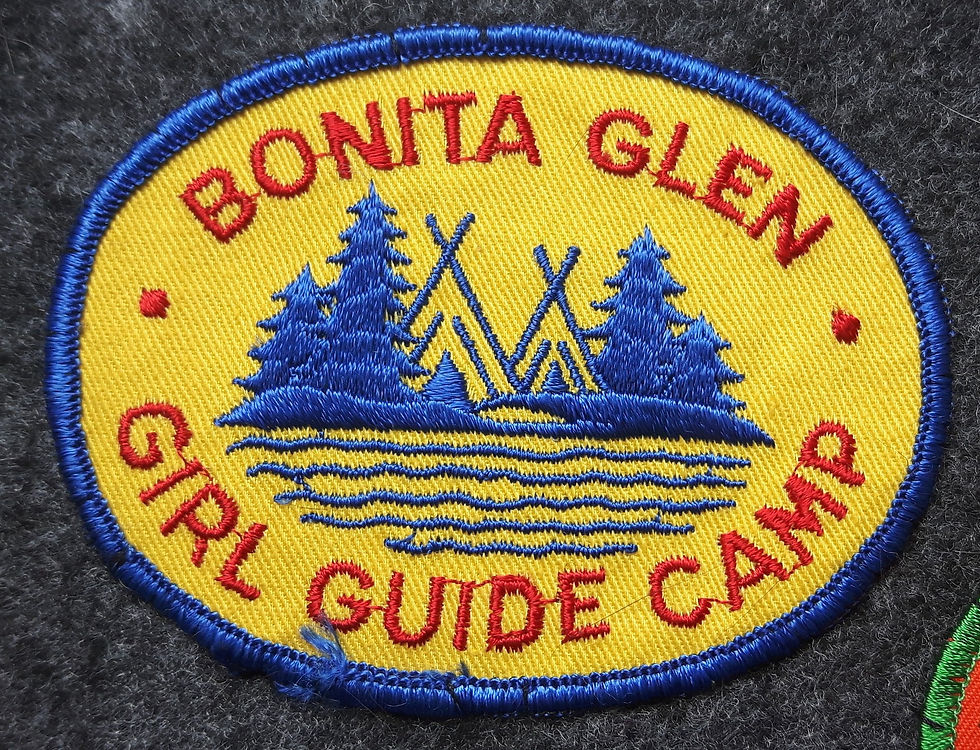
I know there are people who feel this way about the other camps. Doe Lake, Adelaide, Wyoka, Ma-Kee-Wa, Bonita Glen, and all the others I never had a chance to visit — I know these places have histories as rich as Woolsey's, and legacies just as important.
Sometimes, I wonder if the people who made the decision to close Ontario's Girl Guide camps have realized what a mistake it was.

And Thank You
Seriously, thank you. To everyone who had waited so patiently for this book. To everyone who has shared photos and memories, and helped answer questions. To my friends who never tire of swapping the stories we've all heard many times, just to keep Woolsey alive in our minds.
To my mom, for proofreading this thing more times than I can count (any mistakes left behind are 100% mine, mom, I won't blame you!).
And to Emma, for inviting me into this project and trusting me to put it all together into this book.


Comments